
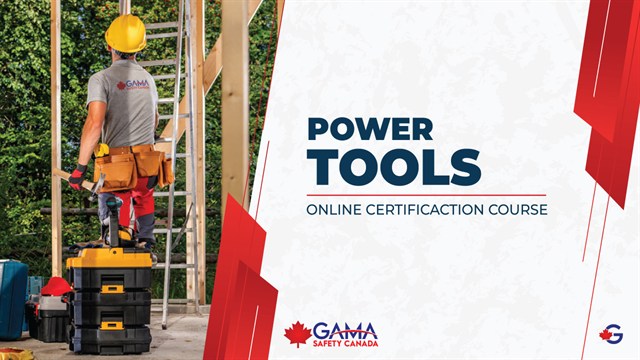
Power tool safety training teaches you how to choose, inspect and use drills, saws, grinders, nailers and hand tools without getting hurt. These tools are used every day on job sites, in warehouses and in shops, and used the wrong way they can cause cuts, eye injuries, hearing loss and electric shock. This guide covers the main hazards, safe work habits, the right PPE, and how to get trained online.
What is power tool safety?
Power tool safety is the set of habits and rules that keep you safe when you use tools driven by electricity, batteries, air or fuel. It also covers hand tools, which cause many injuries too. It starts before you switch the tool on: picking the right tool, checking it, and wearing the right protection.
Power tools are fast and strong. A blade, bit or disc can cut skin and bone in a split second. Grinders and saws throw chips and sparks. Many tools are loud enough to damage hearing over time. Corded tools can cause shock if the cord or tool is damaged. Good training makes these hazards easy to spot and control.
The main hazards of power tools
Cuts and caught-in
Blades, bits and moving parts can cut, or catch gloves, sleeves and hair.
Electric shock
Damaged cords, wet areas and broken housings can expose live parts.
Flying debris
Chips, sparks, dust and broken discs can hit your eyes and face.
Other common hazards include kickback (when a saw or drill suddenly jerks back at you), noise, vibration from long use, dust from cutting and grinding, and trips over cords and hoses. Hand tools add their own risks, such as slips with knives, chisels and screwdrivers, and strain from using the wrong tool for the job.
Safe work habits with power tools
- Use the right tool for the job, and follow the manufacturer’s instructions.
- Inspect before every use. Check cords, plugs, switches, guards, blades and bits. Do not use a tool that is damaged.
- Keep guards in place. Never remove, pin back or bypass a guard.
- Disconnect before changing parts. Unplug the tool or remove the battery before you change a blade, bit or disc, or clear a jam.
- Secure the work. Use clamps or a vise so both hands are free to control the tool.
- Keep your footing and balance. Do not over-reach.
- Keep cords and hoses out of the way, away from heat, oil, sharp edges and water.
- Tag and remove damaged tools from service and report them right away.
What to watch for with common tools:
- Drills: the bit can bind and twist the drill in your hand. Use the side handle when there is one, and hold on firmly.
- Circular saws: let the blade reach full speed before cutting, keep the lower guard working, and stand to the side of the cut line.
- Angle grinders: use the right disc for the job and for the tool’s speed, keep the guard on, and never use a cracked or chipped disc.
- Nailers: keep your hand clear of the nose, never point the tool at anyone, and disconnect the air or battery before clearing a jam.
- Hand tools: keep edges sharp and handles tight, cut away from your body, and do not use a screwdriver as a chisel or pry bar.
Corded and cordless tools both need care. Cordless tools remove trip hazards but still cut just as fast, and batteries must be charged and stored the way the maker says.
Get your Power Tools certificate today
100% online · unlimited free retakes · instant certificate + free wallet card
The PPE you need
Guards and safe habits come first. Then PPE protects you from the risk that is left. Common PPE for tool work includes:
Match the PPE to the task. A face shield goes over safety glasses, not instead of them. Some tools, such as drill presses and lathes, can catch loose gloves, so follow the rules for that tool. Tie back long hair and remove jewellery near rotating parts.
What the rules say, in plain words
Provincial OHS regulations require employers to provide tools that are safe and in good condition, keep them maintained, and make sure workers are trained to use them. Workers must use tools the right way, use the guards and PPE required, and report defects.
An online course gives you the theory. Your employer must still make sure you can safely use the specific tools on your site, and follow the manufacturer’s instructions for each one. That usually means site orientation and a check of your skills on the actual tools.
If you are asked to use a tool you have not been shown how to use, or a tool that looks damaged, you can stop and ask. Tell your supervisor before you start, not after something goes wrong.
Who needs power tool safety training?
Anyone who uses drills, saws, grinders, nailers or hand tools at work, including:
What the online course covers
The Gama Safety Power Tools course takes about 1.5 hours and has two parts:
- Introduction to Power Tools: the common types of power and hand tools, their main hazards, and how to inspect and use them safely.
- Personal Protective Equipment (PPE): how to choose, wear and care for the right PPE, such as eye, hearing, hand and breathing protection.
Does the training expire? There is no single national expiry date. It depends on your province and employer. Many employers ask for a refresher every 1 to 3 years, or when you start using new tools.
How to get trained online with Gama Safety
- Enrol in the online Power Tools course and start right away on your phone, tablet or computer.
- Learn at your own pace. Your progress saves automatically.
- Pass the final exam with 80% or better. Retakes are unlimited and free.
- Download your certificate right away. A physical wallet card is mailed to you free.
The course is available in English, French, Spanish, Punjabi, Hindi, Mandarin and more, and is recognized by employers across Canada. Training a team? Volume pricing starts at 2 seats, with an admin dashboard to track progress.
Frequently asked questions
Do you need a certificate to use power tools at work?
There is no general power tool licence in Canada. Employers must make sure you are trained and able to use the tools safely, and many ask for a training certificate as proof.
What are the most common power tool hazards?
Cuts from blades and bits, flying debris, electric shock, kickback, noise, vibration, dust and tripping over cords and hoses.
What PPE do you need for power tools?
Usually safety glasses, hearing protection, suitable gloves and safety boots, plus a face shield or respirator for some tasks. The right PPE depends on the tool and the job.
Should you unplug a power tool before changing a blade?
Yes. Always unplug the tool or remove the battery before changing a blade, bit or disc, or clearing a jam.
How long does the online power tools course take?
About 1.5 hours. It is self-paced, and you can download your certificate as soon as you pass the final exam.
Does power tool safety training expire?
There is no fixed national expiry. It depends on your province and employer. Many employers ask for a refresher every 1 to 3 years.
Related