
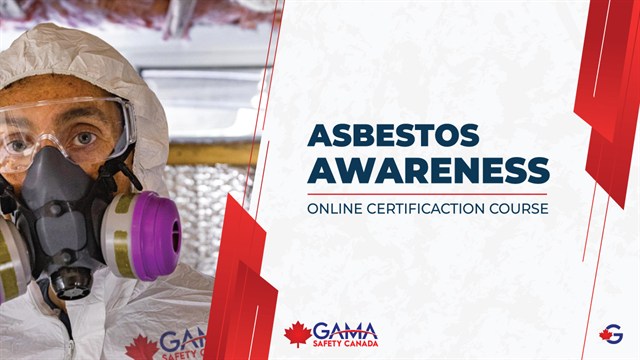
Asbestos is a natural mineral fibre that was used for decades in Canadian buildings, and its fibres can cause serious lung disease when they are breathed in. It is still found in many older homes, offices and industrial sites. This guide explains where asbestos hides, why it is dangerous, who needs awareness training, and how it differs from Level 1 certification.
What is asbestos?
Asbestos is a group of natural minerals made of thin, strong fibres. It resists heat, fire and chemicals, and it is cheap and easy to mix into other materials. That made it popular in construction for many years.
Canada has since banned asbestos in new products. But the ban did not remove asbestos that was already built into homes and buildings. Many older buildings still contain it in floors, walls, ceilings and around pipes and boilers.
Asbestos that is in good condition and left alone is usually lower risk. The danger starts when the material is damaged, worn, or disturbed by drilling, cutting, sanding, breaking or removal. That releases tiny fibres into the air, often too small to see.
Why asbestos is dangerous
Fibres that you breathe in can lodge deep in the lungs and stay there. Over time they can cause serious, often fatal, diseases. These usually appear many years after exposure, so people often do not connect the illness with the job where it started.
Asbestosis
Scarring of the lungs that makes breathing harder over time.
Mesothelioma
A rare cancer of the lining around the lungs or abdomen, strongly linked to asbestos.
Lung cancer
Asbestos exposure raises the risk of lung cancer, and smoking raises it further.
There is no known safe level of exposure. The best protection is simple: do not disturb materials that may contain asbestos, and get them tested by a qualified person before any work starts.
Where asbestos is found
You cannot tell if a material contains asbestos just by looking at it. Only lab testing can confirm it. Treat these materials in older buildings as suspect until they are tested:
- Vinyl floor tiles and the glue under them
- Textured or “popcorn” ceilings and some ceiling tiles
- Drywall joint compound (drywall mud) and some plasters
- Insulation on pipes, boilers, tanks and ducts
- Vermiculite attic insulation
- Cement siding, roofing and pipes
- Some caulking, sealants, fire doors and older fireproofing
If you find a suspect material that is damaged, do not touch it or clean it up. Leave the area, keep others out, and report it to your supervisor.
Before renovation or demolition, a qualified person should survey the building and take samples of materials that will be disturbed. The results tell the employer and building owner where asbestos is, so it can be left alone, managed in place, or removed safely by trained and certified workers before other work starts.
Everyday warning signs include crumbling pipe wrap, cracked or broken floor tiles, water-damaged ceilings and dust or debris near older insulation. Never sweep, vacuum with a regular vacuum or use compressed air on dust that may contain asbestos.
Get your Asbestos Awareness certificate today
100% online · unlimited free retakes · instant certificate + free wallet card
What the rules say
Asbestos at work is covered by provincial OHS regulations. In plain words, employers and building owners must find out where asbestos is before work that could disturb it, control the risk, and make sure workers know about the hazard and are trained for the work they do. Workers must follow safe procedures and report hazards.
In British Columbia, anyone doing asbestos abatement work has needed a WorkSafeBC certificate since January 1, 2024. Level 1 (Foundational Awareness) is for people who transport or dispose of asbestos waste. Level 2 is for people who do abatement work. Certificates are issued by WorkSafeBC after training with an approved provider and passing the WorkSafeBC exam.
An asbestos awareness course is not a WorkSafeBC certificate. It is general awareness training for people who will not disturb asbestos.
Who needs asbestos awareness training?
Asbestos awareness is for people who work in or around older buildings but will not disturb asbestos themselves:
Awareness or Level 1? If you will drill, cut, sand or remove materials that may contain asbestos, or transport or dispose of asbestos waste, take Asbestos Level 1 instead. Gama Safety is a WorkSafeBC-approved provider for Level 1. Online students do the theory online, then book their WorkSafeBC exam session with Gama, live on Zoom or in person in Burnaby, and WorkSafeBC issues the certificate.
What the online course covers
Gama Safety’s Asbestos Awareness course has six modules:
- Introduction to Asbestos. What asbestos is, why it was used so widely, and why it is still a hazard.
- Health Risks of Asbestos. How fibres enter the body and the diseases they can cause.
- Identifying Asbestos in the Workplace. Common suspect materials and when lab testing is needed.
- Managing Asbestos Hazards. How asbestos is managed safely and what to do if you find it.
- Legal and Regulatory Requirements. The duties of employers, building owners and workers.
- Case Studies and Practical Applications. Real-world scenarios with suspected or damaged asbestos.
Does asbestos awareness training expire?
There is no fixed legal expiry for awareness training. It depends on your province and employer, and many employers ask for a refresher every 1 to 3 years. A WorkSafeBC asbestos certificate (Level 1 and up) is different: it is valid for up to three years from the date it is issued. You renew by passing the exam again; if no more than 12 months have passed since it expired, the exam alone is enough.
How to get asbestos awareness certified online
- Enrol in the online Asbestos Awareness course and start right away on any device.
- Learn at your own pace. The course takes about 2 hours, and your progress saves automatically.
- Pass the final exam with 80% or better. Retakes are unlimited and free.
- Download your certificate right away. A physical wallet card is mailed to you free.
The course is available in English, French, Spanish, Punjabi, Hindi, Mandarin and more. Training a team? Volume pricing starts at 2 seats, with an admin dashboard to track progress.
Frequently asked questions
What is asbestos?
Asbestos is a group of natural mineral fibres that resist heat and fire. It was widely used in Canadian building materials for decades and is still found in many older buildings.
Why is asbestos dangerous?
When asbestos materials are damaged or disturbed, tiny fibres get into the air. Breathing them in can cause asbestosis, mesothelioma and lung cancer, often many years later.
How can I tell if something contains asbestos?
You cannot tell by looking. Only a lab test of a sample can confirm asbestos. Treat suspect materials in older buildings as asbestos until a qualified person has tested them.
Is asbestos awareness the same as Asbestos Level 1?
No. Awareness training is for people who will not disturb asbestos. In BC, Level 1 is a WorkSafeBC certificate for people who transport or dispose of asbestos waste, issued after approved training and the WorkSafeBC exam.
Who needs asbestos awareness training?
People who work in or around older buildings but will not disturb asbestos, such as property managers, building supervisors, inspectors, real estate staff, maintenance coordinators and office workers.
How long does the online asbestos awareness course take?
About 2 hours. You can stop and continue anytime and download your certificate as soon as you pass.
Related