
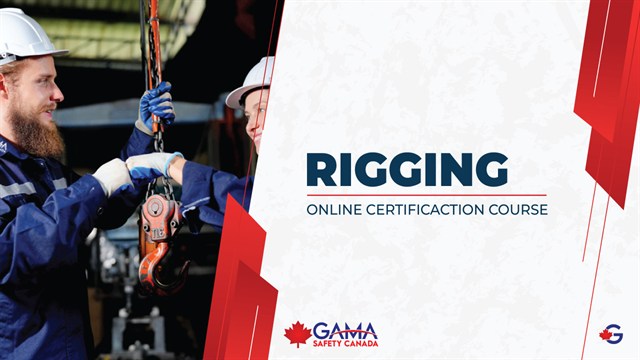
Rigging is the work of preparing and attaching a load so it can be lifted and moved safely with a crane, hoist or other lifting equipment. A wrong sling, a poor hitch or damaged hardware can drop a load in seconds, so everyone involved in a lift needs to know the basics. This guide explains rigging gear, load limits, the rules in plain words, and how to take the theory part of rigging training online.
What is rigging?
Rigging covers everything between the hook and the load: the slings, shackles, hooks, eyebolts and other hardware, and the way they are put together. A rigger works out how heavy the load is, where its centre of gravity is, what gear to use and how to attach it, so the load rises level and stays under control.
Rigging is used on construction sites, in steel erection, in plants and warehouses with overhead cranes and hoists, in oil and gas and energy work, and anywhere heavy items are lifted. Every lift involves a team: the rigger, the equipment operator, often a signal person, and a supervisor who plans and oversees the work.
When rigging goes wrong, the results are serious. A dropped or swinging load can crush or strike workers, and damaged gear can fail with no warning. That is why rigging must be planned, checked and done by trained people.
Rigging equipment and tools
Slings
Wire rope, chain and synthetic (web or round) slings that wrap or attach to the load.
Hardware
Shackles, hooks, eyebolts, rings and links that connect slings to the hook and load.
Control gear
Tag lines to steady the load, plus blocking and softeners to protect slings from sharp edges.
Each piece of gear has a working load limit (WLL): the most weight it is rated to lift in normal use. The WLL is marked on the tag or the hardware. Gear with a missing or unreadable tag should not be used.
Load weight, centre of gravity and sling angles
Three things decide whether a lift is safe:
- Load weight. Know the weight before you lift, from drawings, labels, shipping papers or by calculating it. Never guess.
- Centre of gravity. The hook must be right above the centre of gravity, or the load will tilt or swing when it leaves the ground.
- Sling angle. As the angle between the sling legs and the horizontal gets smaller, the tension in each leg goes up. A flat sling angle can overload a sling even when the load itself is within its rating.
The hitch also matters. The common hitches are the vertical, choker and basket hitch, and each one changes how much the sling can safely hold. A choker hitch, for example, lowers the sling’s capacity compared to a vertical hitch.
Get your Rigging certificate today
100% online · unlimited free retakes · instant certificate + free wallet card
Rigging rules in Canada, in plain words
Rigging and hoisting are covered by provincial OHS regulations, and by federal rules for federally regulated workplaces. The details differ by province, but the main ideas are the same:
- Only trained and competent workers may rig loads.
- Rigging gear must be rated for the load, marked with its capacity, and inspected.
- Damaged gear must be removed from service.
- Lifts must be planned, and workers must stay clear of suspended loads.
Employers must make sure workers are trained and competent for the lifts they do. Your company may also have its own lift planning and inspection procedures.
Inspecting rigging gear before each lift
Check your gear before every use. Remove it from service if you find:
- cuts, tears, burns, or exposed core yarns on synthetic slings,
- broken wires, kinks, crushing or bird-caging on wire rope,
- stretched, cracked, bent or worn chain links, hooks or shackles,
- a missing or broken hook latch,
- heat or chemical damage,
- a missing or unreadable capacity tag.
During the lift, keep everyone out from under the load, use tag lines to control swing, lift a few centimetres first to test balance, and land the load on blocking so slings can be removed safely.
Who needs rigging training?
Anyone who rigs loads, works around lifts, or plans and oversees them, such as:
Even if you never attach a sling yourself, knowing the basics helps you stay safe around lifts. You will know where not to stand, what a safe lift looks like, and when to speak up. Supervisors who plan lifts need the same knowledge to check that the right gear, people and procedures are in place before the load leaves the ground.
New workers often get rigging theory first, then learn on the job under a trained rigger until they are evaluated as competent.
What the online course covers, and the hands-on part
The Gama Safety Rigging course takes about 1.5 hours and has seven modules: introduction to rigging; rigging equipment and tools; rigging safety and regulations, including the roles of riggers, operators, signal persons and supervisors; load handling and inspection; rigging procedures and techniques such as hitches, sling angles and tag lines; practical applications, including what to expect in your hands-on evaluation; and emergency response and first aid.
Important: the online course is the theory part of rigging training. It does not qualify you to rig loads on your own. You also need a hands-on practical evaluation with real rigging gear, done by your employer or a qualified evaluator.
Does rigging training expire? There is no single national expiry date. It depends on your province and employer. Many employers ask for a refresher every 1 to 3 years.
How to take rigging training online with Gama Safety
- Enrol in the online Rigging course and start right away on your phone, tablet or computer.
- Learn at your own pace. Your progress saves automatically.
- Pass the final exam with 80% or better. Retakes are unlimited and free. Download your certificate right away, and a physical wallet card is mailed to you free.
- Complete your hands-on evaluation with your employer or a qualified evaluator before you rig loads on the job.
The course is available in English, French, Spanish, Punjabi, Hindi, Mandarin and more, and is recognized by employers across Canada. Training a team? Volume pricing starts at 2 seats, with an admin dashboard to track progress.
Frequently asked questions
What is rigging in construction?
Rigging is preparing and attaching a load to a crane or hoist so it can be lifted and moved safely. It includes choosing slings and hardware, working out the load weight and centre of gravity, and attaching the load correctly.
What is a working load limit?
The working load limit (WLL) is the most weight a sling or piece of rigging hardware is rated to lift in normal use. It is marked on the tag or the hardware and must never be exceeded.
Why do sling angles matter?
As the angle between the sling legs and the horizontal gets smaller, the tension in each leg goes up. A low sling angle can overload a sling even when the load is within its rating.
Can I get rigging certified fully online?
No. The online course covers the theory. You also need a hands-on practical evaluation with real rigging gear, done by your employer or a qualified evaluator, before you rig loads on your own.
How long does the online rigging course take?
About 1.5 hours. It is self-paced, and you can download your certificate as soon as you pass the final exam.
Does a rigging certificate expire?
There is no fixed national expiry. It depends on your province and employer. Many employers ask for a refresher every 1 to 3 years.
Related