
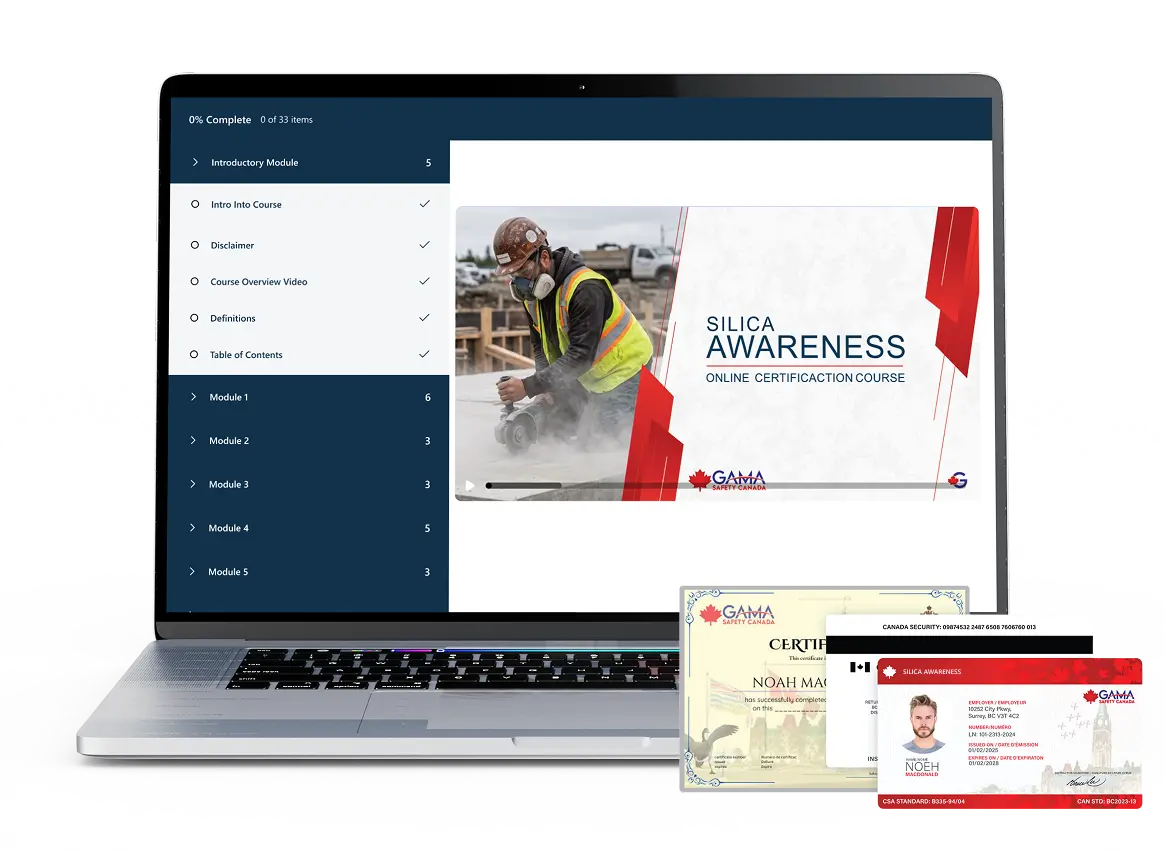
Silica dust is the fine dust released when materials like concrete, brick, stone, mortar and tile are cut, ground, drilled or blasted. It contains crystalline silica, and breathing it in over time can cause silicosis, lung cancer and other serious illness. This guide explains where silica dust comes from, how to control it, who needs training, and how to get certified online.
What is silica dust?
Silica is a natural mineral found in sand, stone and soil. The form that matters at work is crystalline silica, and quartz is the most common type. It is in many everyday building materials, including concrete, brick, block, stone, mortar, tile and some engineered stone countertops.
Solid materials are not the problem. The hazard starts when they are cut, ground, drilled, sanded, crushed or blasted. That breaks the silica into very fine particles that float in the air. The smallest ones are invisible, so a work area can look clear and still be unsafe.
These fine particles are small enough to reach deep into your lungs, where your body cannot easily clear them.
Common tasks that create silica dust include:
- Cutting concrete, brick, block, pavers or tile with a saw
- Grinding or polishing concrete floors and walls
- Drilling or coring into concrete or masonry
- Chipping, jackhammering and demolition
- Abrasive blasting with sand or on concrete
- Cutting, grinding and polishing stone and engineered stone countertops
- Sanding drywall joint compound that contains silica, and mixing dry mortar or grout
- Sweeping or blowing off dusty surfaces
How silica dust harms your health
Silicosis
Scarring of the lungs that makes breathing harder. It cannot be cured, and it can keep getting worse after exposure stops.
Lung cancer
Long-term exposure to crystalline silica raises the risk of lung cancer.
Other illness
Silica exposure is also linked to other lung and kidney disease.
Smoking adds to the damage silica does to the lungs. Silica disease often develops slowly, so damage can build up for years before a worker notices symptoms such as shortness of breath or a lasting cough. Preventing exposure is the only real protection, and it starts with knowing which tasks create dust.
How to control silica exposure
Good silica control follows the hierarchy of controls: start with the most effective options and use respirators as the last line of defence.
- Eliminate or substitute. Plan the work to avoid cutting on site, or use materials and methods that create less dust.
- Engineering controls. Use wet methods, such as water on the blade or bit, and tools with dust extraction shrouds connected to a suitable vacuum.
- Safe work practices. Clean up with a HEPA vacuum or wet methods. Never dry sweep or use compressed air to blow dust off surfaces or clothing. Keep other workers away from dusty tasks.
- Respirators. When dust cannot be controlled enough, wear the right respirator. It must fit properly, so a fit test is needed, and you must be clean-shaven where the seal meets your face.
Do not eat, drink or smoke in dusty areas, and change out of dusty clothes before going home.
Controls only work when they are used and kept in good shape. Check that the water supply is running before you cut, that vacuum hoses are attached and filters are not clogged, and that your respirator is clean and in good condition. If a control is missing or broken, stop and tell your supervisor.
Get your Silica Awareness certificate today
100% online · unlimited free retakes · instant certificate + free wallet card
What the rules say
Provincial OHS regulations require employers to control worker exposure to silica dust and to train workers who may be exposed. In plain words, where silica dust is created, employers are expected to assess the risk, keep exposure as low as reasonably possible, and have an exposure control plan that sets out the controls, the respirators to use, and how the work will be checked.
A good exposure control plan lists the tasks that create dust, the control used for each task, who is responsible, how workers are trained, and how the plan is reviewed. It should match what actually happens on site, not sit in a binder.
Supervisors must make sure the plan is followed on site. Workers must use the controls and PPE provided and report problems. The exact rules and exposure limits differ by province.
Who needs silica awareness training?
Anyone on a site where concrete, stone, brick or tile is cut, ground or drilled can be exposed, even if they are not doing the task themselves. Dust drifts, so a worker nearby can breathe in as much as the person holding the saw.
Supervisors benefit as much as workers. They plan the job, choose the tools, set up the controls and make sure the exposure control plan is followed, so they need to understand the hazard as well as the people doing the cutting.
What the online course covers
Gama Safety’s Silica Awareness course has three modules:
- Silica Awareness: The Hazard. What crystalline silica is, where it is found, which tasks create dust, and how it damages your lungs and health.
- Controlling Exposure to Silica. How wet methods, dust extraction, HEPA vacuums, housekeeping and respirators keep exposure low.
- Silica Legislation & Requirements. Exposure control plans and the legal duties of employers, supervisors and workers.
Does silica awareness training expire?
There is no single national expiry date. It depends on your province and employer. Many employers ask for a refresher every 1 to 3 years, and workers should be retrained when tools, tasks or the exposure control plan change.
How to get silica awareness certified online
- Enrol in the online Silica Awareness course and start right away on any device.
- Learn at your own pace. The course takes about 2 hours, and your progress saves automatically.
- Pass the final exam with 80% or better. Retakes are unlimited and free.
- Download your certificate right away. A physical wallet card is mailed to you free.
The course is available in English, French, Spanish, Punjabi, Hindi, Mandarin and more. Training a crew? Volume pricing starts at 2 seats, with an admin dashboard to track progress.
Frequently asked questions
What is silica dust?
Silica dust is the fine dust released when materials that contain crystalline silica, such as concrete, brick, stone, mortar and tile, are cut, ground, drilled or blasted.
Why is silica dust dangerous?
The finest particles reach deep into the lungs. Breathing them over time can cause silicosis, an incurable lung disease, as well as lung cancer and other serious illness.
How do you control silica dust on a job site?
Use wet methods and tools with dust extraction, clean up with a HEPA vacuum instead of dry sweeping or compressed air, keep others away, and wear a properly fitted respirator when needed.
Is a dust mask enough for silica?
Not always. The respirator must be the right type for the task and must fit properly, which means a fit test. Respirators should be used along with dust controls, not instead of them.
Who needs silica awareness training?
Concrete and masonry workers, drywall and tile installers, countertop fabricators, demolition crews, sandblasters, general labourers and supervisors on sites where silica dust is created.
How long does the online silica awareness course take?
About 2 hours. You can stop and continue anytime and download your certificate as soon as you pass.
Related