
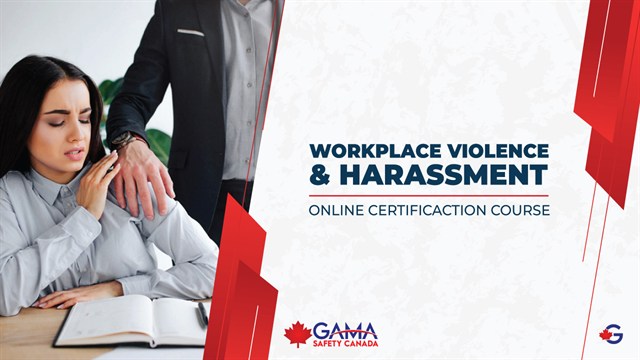
Workplace violence is any threat, attempt or act of physical force against a worker, and workplace harassment is unwelcome comments or conduct that a person knows, or should know, is unwelcome. Both can happen in person or online, and both are workplace safety issues under Canadian law. This guide explains what they look like, who must do what, and how training helps prevent them.
What is workplace violence and harassment?
Many people think of workplace violence as a physical attack. That is part of it, but the idea is wider. It also covers threats, like a customer saying they will hurt you, and attempts, like someone swinging at you and missing.
Harassment is a pattern or act of unwelcome behaviour. It includes insults, intimidation, offensive jokes, spreading rumours, unwanted comments about how someone looks, and sexual harassment. Bullying is a common form of harassment. It can happen face to face, by text, by email or on social media.
The exact legal wording is different in each province, but the core idea is the same. Behaviour that hurts, threatens or humiliates a worker is a safety issue, not just a personal problem. Normal management actions, like giving fair feedback or assigning tasks, are usually not harassment.
The forms it takes
Violence and harassment can come from many directions. Knowing the sources helps you spot risks early.
Customers and the public
Clients, patients, passengers or strangers who become angry, abusive or aggressive.
Co-workers and supervisors
Bullying, intimidation, sexual harassment or threats from people you work with.
Personal relationships
A partner or family member who follows the abuse into the workplace.
Some jobs face higher risk. These include work with the public, handling cash, working alone or late at night, and caring for people who may be in distress.
Warning signs to watch for include shouting or swearing, clenched fists, pacing, threats (even as “jokes”), sudden changes in behaviour, and repeated targeting of one person. Noticing these early gives you time to act before things get worse.
What the law requires
Provincial OHS regulations across Canada require employers to deal with violence and harassment as workplace hazards. In general terms, employers must:
- Assess the risk of violence in the workplace.
- Put policies and procedures in place to prevent incidents and handle complaints.
- Train workers on the risks, the policies and how to report concerns.
- Investigate reports and take action to fix the problem.
Federally regulated workplaces, such as banks, airlines, telecom and interprovincial transport, fall under the Canada Labour Code and its Work Place Harassment and Violence Prevention Regulations.
The details, such as how often policies must be reviewed, differ by province. Your employer’s own policy should tell you exactly how to report a concern at your workplace.
Get your Workplace Violence and Harassment certificate today
100% online · unlimited free retakes · instant certificate + free wallet card
Who does what: employers, supervisors and workers
- Employers assess risks, write the policy, train staff, and make sure complaints are investigated fairly.
- Supervisors watch for warning signs, take reports seriously, and make sure safe work procedures are followed.
- Workers follow the policy, treat others with respect, and report incidents and threats, even ones that seem small.
Reporting matters. An employer cannot fix a problem they do not know about. Workers who report in good faith are protected from reprisal under OHS laws.
What prevention looks like in practice. After a risk assessment, employers choose controls that fit the job. Common examples include:
- Good lighting, clear sightlines and a safe layout at counters and entrances.
- Limiting cash on hand and posting signs that say so.
- Check-in procedures and personal alarms for people who work alone or late.
- Panic buttons, locked staff areas and a clear way to call for help.
- A written code of conduct that explains what behaviour is not accepted.
- A fair, confidential process for making and investigating complaints.
Good prevention also means following up. After an incident, the employer should review what happened, support the people affected, and update the risk assessment and procedures so it does not happen again.
Who needs this training?
Every worker, supervisor and manager can benefit. It is especially useful in jobs that deal with the public or involve working alone:
Supervisors and managers should take it too. They are often the first person a worker reports to, and how they respond makes a big difference.
What the training covers
Gama Safety’s online Workplace Violence and Harassment course has three parts:
- Workplace Violence & Harassment: what violence and harassment are, the forms they take, and the warning signs to watch for.
- Workplace Violence & Harassment Prevention: how risk assessments, policies and safe work procedures prevent incidents, and the roles of employers, supervisors and workers.
- Responding to Violence and Harassment: how to calm tense situations, get help, report incidents, and support those affected with proper follow-up.
A few simple habits make a big difference when a situation gets tense: stay calm, keep a safe distance, speak slowly and clearly, do not argue, know your exit, and get help early. If anyone is in immediate danger, call 911.
This course gives you the general knowledge. Your employer must also train you on their own policy, reporting steps and site procedures.
Does the training expire?
There is no single national expiry date. It depends on your province and your employer. Many employers ask for a refresher every 1 to 3 years, and training should be updated when the workplace policy or risks change.
How to get certified online with Gama
- Enrol in the online Workplace Violence and Harassment course and start right away on any device.
- Learn at your own pace. The course takes about 1 hour, and your progress saves automatically.
- Pass the final exam with 80% or better. Retakes are unlimited and free.
- Download your certificate right away. A physical wallet card is mailed to you free.
The course is available in English, French, Spanish, Punjabi, Hindi, Mandarin and more, and it is recognized by employers across Canada. Training a team? Team pricing starts at 2 seats, with an admin dashboard. Questions? Call 1-866-661-9803 or email info@gamasafety.ca.
Frequently asked questions
What is considered workplace violence in Canada?
Workplace violence includes any threat, attempt or act of physical force against a worker that could cause injury. It can come from customers, co-workers, supervisors or even a partner who comes to the workplace.
What is workplace harassment?
Workplace harassment is unwelcome comments or conduct against a worker, such as insults, intimidation, bullying, offensive jokes or sexual harassment. Fair management actions, like giving feedback or assigning work, are usually not harassment.
Is workplace violence and harassment training mandatory?
Provincial OHS regulations require employers to assess these risks, have prevention policies and train workers on them. The exact rules differ by province, so check what your employer requires.
What should I do if I am harassed at work?
Follow your workplace policy and report it to your supervisor or the person named in the policy. Write down what happened, when and who saw it. If you are in immediate danger, call 911.
Can I be punished for reporting harassment?
No. OHS laws protect workers who report in good faith from reprisal, such as being fired, disciplined or treated worse for speaking up.
How long does the online course take?
Gama Safety’s course takes about 1 hour. You can download your certificate as soon as you pass the final exam.
Related