
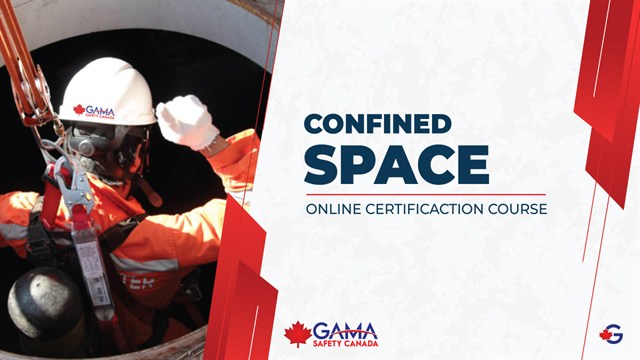
A confined space is an enclosed or partly enclosed area that is not designed for people to work in all the time and has limited ways in and out. Tanks, silos, pits, manholes, vaults and sewers are common examples. This guide explains why these spaces are so dangerous, who does what during an entry, and how awareness training fits with your employer’s entry program.
What is a confined space?
A space is usually treated as a confined space when it has all of these features:
- It is enclosed or partly enclosed.
- It is not designed or intended for people to occupy all the time.
- It has limited or restricted ways in or out, which can make first aid, escape or rescue harder.
- It is big enough for a worker to enter and do work inside.
Common examples include tanks, vessels, silos, hoppers, pits, sumps, manholes, vaults, sewers, some crawl spaces and large ducts. The exact definition is set by each province’s OHS regulations, so the wording can differ slightly from place to place.
A space can look harmless from the outside. The air inside can change quickly, and you cannot always see or smell the danger.
Why confined spaces are so dangerous
Bad air
Too little oxygen, or toxic gases such as hydrogen sulfide or carbon monoxide that build up with no warning.
Fire and explosion
Flammable gases, vapours or dusts can collect and ignite from a spark or hot work.
Engulfment and entrapment
Grain, sand, liquids or sloped walls can trap or bury a worker.
Other hazards include moving machinery, energy that was not locked out, heat, noise, and slips and falls. Tight spaces also make it hard to get out fast.
A co-worker who rushes in to help without protection can quickly become a second victim. Awareness training teaches you to stay out, raise the alarm and call trained rescuers.
Entrant, attendant and entry supervisor
Every confined space entry is a team job. Each person has a clear role:
- Entrant: the worker who goes in. They must know the hazards, follow the permit, watch for warning signs, and get out right away if told to or if conditions change.
- Attendant (standby person): stays outside the space, keeps track of the entrants, stays in contact with them, and calls for rescue if something goes wrong. The attendant does not go in to rescue.
- Entry supervisor: checks that the hazard assessment, permit, testing and rescue plan are in place before entry, and can stop or cancel the work.
Rescue workers have their own separate, hands-on training and equipment.
A typical safe entry follows the same basic steps every time:
- A hazard assessment is done for the space and the job, and written procedures are prepared.
- An entry permit is issued that lists the hazards, controls, people and equipment.
- Pipes, lines and machinery are isolated and locked out.
- The air is tested before entry, for oxygen, flammable gases and toxic gases, and monitored while people are inside.
- The space is ventilated if needed, and the right PPE and retrieval equipment are set up.
- A rescue plan is in place and rescuers can be reached quickly.
- The attendant stays in contact with the entrants until everyone is out and the permit is closed.
Get your Confined Space Awareness certificate today
100% online · unlimited free retakes · instant certificate + free wallet card
What the rules say
Confined spaces are covered by provincial OHS regulations. In plain words, employers must identify the confined spaces at their workplace, keep people out of spaces they do not need to enter, and have a written entry program before anyone goes in. Each entry needs a hazard assessment and written procedures, and the work must be supervised.
In British Columbia, these rules are in Part 9 of the OHS Regulation. It requires that everyone assigned duties related to entry, including entrants, standby persons and rescuers, be adequately instructed and trained in the hazards and the precautions. Rescue personnel must also hold a practice drill at least once a year.
Much of this training must be specific to the space, because each space has its own hazards and procedures.
Who needs confined space awareness training?
Anyone who may enter or work near confined spaces, plus attendants and entry supervisors. It is common in:
Awareness is not entry training. Before anyone enters a confined space, the employer must also give training on that specific space, its hazard assessment, entry permit and rescue plan.
Awareness training is still valuable for people who will never go inside. Workers who pass by open manholes, work next to tanks or pits, or supervise crews need to recognize a confined space, keep others out, and know never to attempt an unplanned rescue.
What the online course covers
Gama Safety’s Confined Space Awareness course has five modules:
- Introduction to Confined Space. What a confined space is, common examples and the main hazards.
- Team Responsibilities. The roles of the entrant, attendant and entry supervisor.
- Entry Equipment. Gas monitors, ventilation, communication tools and retrieval equipment.
- Personal Protective Equipment (PPE). The PPE used for confined space work, including respiratory protection, and its limits.
- Procedures. Hazard assessment, permits, isolation, atmospheric testing, and emergency and rescue planning.
Does confined space training expire?
There is no single national expiry date. It depends on your province and employer. Many employers ask for a refresher every 1 to 3 years, and retraining is needed when the space, the work or the procedures change. In BC, rescue personnel must take part in a practice drill at least once a year.
How to get confined space awareness certified online
- Enrol in the online Confined Space Awareness course and start right away on any device.
- Learn at your own pace. The course takes about 2 hours, and your progress saves automatically.
- Pass the final exam with 80% or better. Retakes are unlimited and free.
- Download your certificate right away. A physical wallet card is mailed to you free.
The course is available in English, French, Spanish, Punjabi, Hindi, Mandarin and more. Training a crew? Volume pricing starts at 2 seats, with an admin dashboard to track progress.
Frequently asked questions
What is a confined space?
An enclosed or partly enclosed area that is not designed for people to occupy all the time, has limited ways in and out, and is big enough for a worker to enter. Examples include tanks, silos, pits, manholes, vaults and sewers.
What are the main hazards in a confined space?
Low oxygen, toxic gases such as hydrogen sulfide, flammable atmospheres, engulfment by materials like grain or liquids, moving machinery and difficult escape or rescue.
What does a confined space attendant do?
The attendant, or standby person, stays outside the space, keeps track of and communicates with the entrants, and calls for rescue if needed. The attendant must be trained for that role.
Is an online confined space course enough to enter a confined space?
No. Online awareness training builds knowledge. Before entering, you need training under your employer’s written entry program, specific to the space and the work.
Is confined space training mandatory?
Provincial OHS regulations require workers with confined space entry duties to be trained. In BC, Part 9 of the OHS Regulation requires everyone assigned entry duties to be adequately instructed and trained.
How long does the online confined space awareness course take?
About 2 hours. You can stop and continue anytime and download your certificate as soon as you pass.
Related