
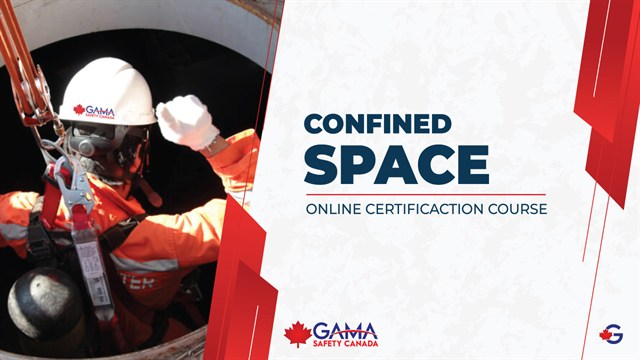
Short answer: In British Columbia, Part 9 of the Occupational Health and Safety Regulation requires employers to identify confined spaces, and before anyone enters one, to have a written confined space entry program. Hazard assessments and procedures must be prepared by a qualified person, and everyone with entry duties (entrants, standby persons, supervisors and rescuers) must be adequately instructed and trained in the hazards and precautions. Awareness training is a good start, but it is not the same as being trained to enter.
What counts as a confined space in BC?
WorkSafeBC defines a confined space (s. 9.1) as an area, other than an underground working, that:
- is enclosed or partially enclosed,
- is not designed or intended for continuous human occupancy,
- has limited or restricted ways in or out that could make first aid, evacuation or rescue harder, and
- is large enough that a worker could go in to do assigned work.
Common examples include tanks, silos, vessels, vaults, pits, sumps, manholes, some crawl spaces and large ducts.
What employers must do
Part 9 puts most of the duties on the employer:
- Identify every confined space at the workplace and decide whether anyone will need to enter it (s. 9.2).
- Secure or sign spaces that no one needs to enter (s. 9.3).
- Write and implement a confined space entry program before any worker is required or permitted to enter (s. 9.5).
- Assign a trained administrator for the program (s. 9.6) and a trained supervisor for the job before anyone enters (s. 9.7).
- Do a hazard assessment for each space and each task (s. 9.9), and write procedures to eliminate or minimize the hazards (s. 9.10).
The qualified person
The hazard assessment and written procedures must be prepared by a qualified person with adequate training and experience in recognizing, evaluating and controlling confined space hazards (s. 9.11). The Regulation lists examples of acceptable qualifications, such as a Certified Industrial Hygienist, Registered Occupational Hygienist, Canadian Registered Safety Professional or a professional engineer with confined space experience. It also allows other combinations of education, training and experience acceptable to WorkSafeBC.
A general online course won't make you a qualified person on its own.
Get your Confined Space Awareness certificate today
100% online · unlimited free retakes · instant certificate + free wallet card
Training for everyone involved in an entry
Section 9.8 requires that each person assigned duties related to entry into a confined space be adequately instructed and trained in the hazards and the required precautions. That covers more than the people going in:
- Entrants: the space's hazards, the entry permit, atmospheric testing results, lockout and isolation, ventilation, PPE and how to get out.
- Standby persons: how to monitor the entrant and summon rescue. In a low hazard atmosphere, the standby person must check on the entrant's well-being at least every 20 minutes; in a high hazard atmosphere, the standby person must be stationed at the entrance.
- Atmospheric testers: testing must be done by a qualified person using properly calibrated equipment.
- Rescue personnel: everyone assigned rescue duties must be properly equipped and adequately trained. A practice drill must be held at least once a year, and the employer of the rescue persons must keep training and drill records (s. 9.38).
Much of this training has to be specific to the space, because each space has its own hazards and procedures.
Awareness vs entry vs rescue training
It helps to think of confined space training in three levels:
- Awareness: recognizing a confined space, understanding the main hazards (oxygen deficiency, toxic gases like H2S, flammable atmospheres, engulfment, entrapment), and knowing never to enter without authorization or try an unplanned rescue. Good for anyone who works near confined spaces.
- Entry and standby: the hands-on knowledge to enter or attend under your employer's program, including permits, testing, isolation, ventilation and equipment.
- Rescue: specialized training and equipment for retrieving a worker, with annual practice drills.
A co-worker who rushes in to help without protection can quickly become a second victim. Awareness training teaches you to stay out and call for trained rescue.
How to get trained with Gama Safety
Our online Confined Space Awareness course is awareness-level training. It teaches you to recognize confined spaces and their hazards, and what entry permits, atmospheric testing and emergency procedures involve. It does not qualify you to enter a confined space, act as a standby person or perform rescue. Your employer must still train you under its entry program.
- Price: $39.95
- Time: about 2 hours, self-paced, in English or French
- Certificate: pass the final exam (80% or better) to get your digital certificate right away, plus a physical wallet card mailed free
Working where hydrogen sulfide may be present? Add our online Hydrogen Sulfide awareness course. Training a crew? Volume pricing starts at 5 seats. Call +1 (866) 661-9803 or email info@gamasafety.ca.
Frequently asked questions
Is confined space training mandatory in BC?
Yes, for anyone assigned duties related to entry. Section 9.8 requires them to be adequately instructed and trained in the hazards and required precautions.
Does confined space training expire in BC?
The Regulation doesn't set an expiry date for entrant training. Rescue personnel must do a practice drill at least once a year. Many employers set their own refresher schedule.
Is an online confined space course enough to enter a confined space?
No. Online awareness training builds knowledge. Before entering, you need training under your employer's written entry program, specific to the space and the work.
Who can write a confined space entry procedure in BC?
A qualified person with adequate training and experience in confined space hazards, such as an occupational hygienist, a CRSP or a professional engineer with confined space experience.
What is a standby person?
A worker assigned to stay outside the space, monitor the entrant and summon rescue if needed. The standby person must be trained for that role.
Related