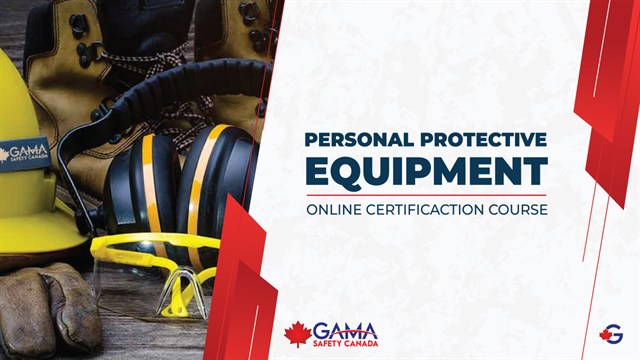
PPE, or personal protective equipment, is the gear you wear to protect yourself from hazards at work, such as hard hats, safety glasses, hearing protection, respirators, gloves, safety boots and high-visibility clothing. PPE only works when it is the right type for the hazard, fits well and is in good condition. This guide explains the main types of PPE, the rules in plain words, and how to get PPE training online.
What is PPE?
Personal protective equipment is anything a worker wears or uses to reduce contact with a hazard. It puts a barrier between your body and the danger: a falling tool, flying chips, loud noise, dust, chemicals, sharp edges or traffic.
PPE does not remove the hazard. The danger is still there. That is why PPE must be chosen for the exact hazard, worn the right way every time, and kept in good shape. Many injuries happen because PPE was missing, damaged, the wrong type, or worn the wrong way.
Common examples include hard hats, safety glasses and face shields, earplugs and earmuffs, respirators, work gloves, safety boots, high-visibility vests, coveralls and aprons.
Why PPE is the last line of defence
Safety professionals use the hierarchy of controls to pick the best way to deal with a hazard. The options at the top work best. PPE is at the bottom:
- Elimination: remove the hazard completely.
- Substitution: replace it with something less dangerous.
- Engineering controls: isolate people from the hazard, such as guards, barriers or ventilation.
- Administrative controls: change the way people work, such as procedures, training, signs and job rotation.
- PPE: protect the worker when the other controls cannot reduce the risk enough.
PPE is last because it depends on people. If the gear fails, does not fit or is not worn, the worker is exposed. Employers should use the higher controls first, and PPE on top of them where risk remains.
The main types of PPE
Head protection
Hard hats protect against falling objects and bumps to the head.
Eye and face
Safety glasses, goggles and face shields stop flying particles, splashes and light.
Hearing
Earplugs and earmuffs reduce noise that can damage hearing over time.
Respiratory
Respirators protect your lungs from dust, fumes, vapours and other airborne hazards.
Hands
Gloves matched to the job: cuts, chemicals, heat, cold or vibration.
Feet and body
Safety boots, high-visibility clothing, coveralls and aprons.
Each type comes in many versions. A glove that stops cuts may not stop chemicals. A dust mask is not the same as a respirator for fumes. The key skill is matching the PPE to the hazard in front of you.
Get your Personal Protective Equipment certificate today
100% online · unlimited free retakes · instant certificate + free wallet card
Who must provide PPE? The rules in plain words
In Canada, PPE rules are set in provincial and territorial OHS regulations, and in federal rules for federally regulated workplaces. The details vary, but the basic duties are similar everywhere:
- Employers must look at the hazards, use other controls first, and make sure workers have the right PPE where it is needed. They must train workers on how to use it and make sure it is used.
- Supervisors must make sure their crew wears the required PPE and that it is in good condition.
- Workers must wear and use the PPE required for the job, look after it, and report damaged or missing gear.
Who pays for which items can differ by province and by type of PPE, so check your local rules and your company policy. Much PPE must also meet a recognized standard, which is shown by markings and ratings on the gear.
How to choose, wear and care for PPE
- Match the hazard. Know what you are protecting against before you pick the gear.
- Check markings and ratings. Labels show what the item is rated for. Make sure it fits the job.
- Get a good fit. Loose gloves, a sliding hard hat or a poorly sealed respirator will not protect you. Tight-fitting respirators need a fit test.
- Inspect before each use. Look for cracks, tears, holes, worn soles, or faded and dirty hi-vis.
- Clean and store it properly. Keep it away from sunlight, heat and chemicals that can weaken it.
- Replace it when it is damaged, worn out, or past the maker’s service life.
Watch for common mistakes. Safety glasses pushed up on the head, earplugs that are not fully inserted, a hard hat worn backwards when it is not designed for that, and gloves with holes all give a false sense of safety. If your PPE gets in the way of the work, tell your supervisor so a better option can be found, instead of taking it off.
Who needs PPE training?
Anyone who wears PPE on the job, and anyone who chooses PPE for others. That includes workers in:
Supervisors who choose PPE for their crew and make sure it is used also benefit. Your employer must still train you on the specific PPE used at your site.
What the online PPE course covers
The Gama Safety Personal Protective Equipment course has two parts and takes about 35 minutes:
- Personal Protective Equipment (PPE): what PPE is, why it is the last line of defence in the hierarchy of controls, and the duties of employers and workers.
- Specific PPE guidance: how to select, wear, inspect and care for head, eye and face, hearing, respiratory, hand, foot and body protection.
Does PPE training expire? There is no single national expiry date. It depends on your province and employer. Many employers ask for a refresher every 1 to 3 years, and you should be retrained when your PPE or your job changes.
How to get PPE certified online with Gama Safety
- Enrol in the online PPE course and start right away on your phone, tablet or computer.
- Learn at your own pace. Your progress saves automatically.
- Pass the final exam with 80% or better. Retakes are unlimited and free.
- Download your certificate right away. A physical wallet card is mailed to you free.
The course is available in English, French, Spanish, Punjabi, Hindi, Mandarin and more, and is recognized by employers across Canada. Training a team? Volume pricing starts at 2 seats, with an admin dashboard to track progress.
Frequently asked questions
What does PPE stand for?
PPE stands for personal protective equipment. It is the gear workers wear to protect themselves from hazards, such as hard hats, safety glasses, hearing protection, respirators, gloves, safety boots and high-visibility clothing.
Why is PPE the last line of defence?
Because PPE does not remove the hazard. It only works if it is the right type, fits well, is in good condition and is worn. Employers should first try to eliminate, substitute or control the hazard, then use PPE for the risk that remains.
Who is responsible for providing PPE in Canada?
Employers must make sure workers have the right PPE and are trained to use it. Workers must wear it and look after it. Exact rules, including who pays for certain items, depend on your province or territory.
What are the main types of PPE?
Head protection, eye and face protection, hearing protection, respiratory protection, hand protection, foot protection and body protection such as high-visibility clothing and coveralls.
How long does the online PPE course take?
About 35 minutes. It is self-paced, and you can download your certificate as soon as you pass the final exam.
Does a PPE certificate expire?
There is no fixed national expiry. It depends on your province and employer. Many employers ask for a refresher every 1 to 3 years, or when your job or equipment changes.
Related