
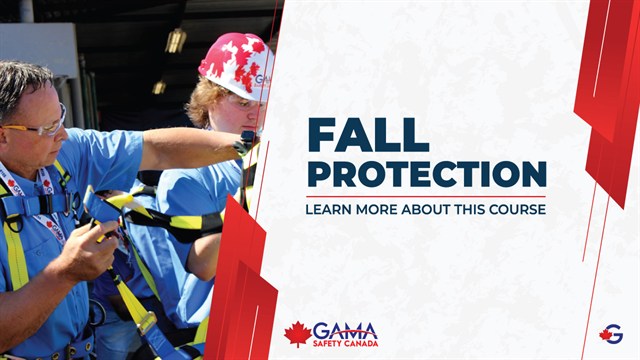
Fall protection is the set of equipment, systems and work methods that stop workers from falling, or safely stop a fall once it starts, when they work at heights. It includes guardrails, fall restraint and fall arrest systems such as a full-body harness, lanyard and anchor. This guide explains how fall protection works, when it is required, and how to get fall protection training online.
What is fall protection?
Falls are one of the most common causes of serious injury on construction and industrial sites. Fall protection is how employers and workers control that risk.
It covers more than a harness. Fall protection starts with removing the hazard or putting up a barrier, and only then moves to personal equipment. Workers must be trained in the fall protection system before they use it.
Fall protection training is often called working at heights training. It teaches you when protection is needed, how the equipment works, how to inspect and wear it, and what to do if someone falls.
Fall prevention, restraint and arrest
There are three main ways to protect a worker from a fall. The best choice is the one higher on the list that works for the job.
1. Fall prevention
Guardrails, covers and barriers that keep everyone away from the edge, with no harness needed.
2. Fall restraint
A harness and lanyard set so you cannot reach the edge. You never fall at all.
3. Fall arrest
A system that stops you after you fall, before you hit the ground or a lower level.
Restraint is preferred over arrest. With restraint nobody falls, so there is no risk of hitting something on the way down or being left hanging in a harness.
When is fall protection required?
Each province and territory sets its own rules in its OHS regulations, so the trigger height is not the same everywhere. Always check the rules where you work, and your site’s rules, which can be stricter.
In British Columbia, for example:
- A fall protection system must be used where a fall of 3 m (10 ft) or more could happen.
- It is also needed at lower heights when a fall could cause a worse injury than landing on a flat surface, such as falling onto machinery, rebar or into an open tank.
- Employers must use guardrails first where practicable, then fall restraint, then fall arrest.
- A written fall protection plan is needed when workers could fall 7.5 m (25 ft) or more and are not protected by permanent guardrails, or when work procedures are used instead of fall protection equipment. The plan must be at the work site before work starts.
- Workers must be instructed in the fall protection system for the area before they work there.
- Equipment must be inspected by a qualified person before use on each shift.
In Ontario, construction workers who use certain fall protection need a Working at Heights program approved by Ontario’s Chief Prevention Officer. An online course does not replace that program.
Get your Fall Protection certificate today
100% online · unlimited free retakes · instant certificate + free wallet card
Fall protection equipment
A personal fall arrest system is often described as the ABCs:
- Anchor: a secure point that can hold the force of a fall. Anchors can be permanent or temporary.
- Body wear: a full-body harness that spreads the force of a fall across your body.
- Connector: what joins you to the anchor, such as a lanyard with an energy absorber, a self-retracting lifeline, or a lifeline with a rope grab.
In Canada, fall protection equipment is made and tested to the CSA Z259 family of standards. Check the labels, inspect your gear before each use, and take anything damaged out of service.
You also need enough clearance below you. If the system stretches too far, you can hit the ground or an object before it stops you.
Fall injuries and rescue
A fall arrest system stops the fall, but the danger is not over. A worker hanging in a harness can develop suspension trauma, where blood pools in the legs. This can become serious quickly.
That is why every job with fall arrest needs a rescue plan before work starts. The plan should say who will rescue the worker, what equipment they will use, and how fast they can reach them. Calling emergency services is not a full plan on its own.
Who needs fall protection training?
Anyone who works where they could fall needs training before they start, including:
What the online course covers
Gama Safety’s online Fall Protection course takes about 3 hours and has eight modules:
- What is Fall Protection (Working at Heights): when it is needed, and fall prevention vs restraint vs arrest.
- OHS Regulations, Hazards and Procedures: the main rules, common fall hazards and how to control them.
- Fall Protection Equipment: harnesses, lanyards, self-retracting lifelines and connectors.
- Anchors: choosing, inspecting and using permanent and temporary anchors.
- Special Situations: roofs, ladders, scaffolds, openings and leading edges.
- Potential Injuries due to Falls: fall injuries, suspension trauma and quick rescue.
- Wearing your Fall Protection Equipment: inspecting, putting on and adjusting your harness.
- Emergency Preparedness and Response: what a rescue plan must include and what to do if a worker falls.
The online course covers the theory. Many employers also want hands-on practice with a real harness and a rescue demonstration. Gama Safety Canada offers hands-on Fall Protection training in Burnaby, BC, or at your site. Your employer must still instruct you on the system at each site.
Does it expire, and how to get certified
BC sets no single legal expiry date for fall protection training. Your employer must keep your training current, and many employers and sites ask for a refresher every 3 years, or sooner after a new site, new equipment or an incident. In Ontario, Working at Heights training for construction is valid for 3 years.
- Enrol in the online Fall Protection course and start on any device.
- Learn at your own pace. Your progress saves automatically.
- Pass the final exam with 80% or better. Retakes are unlimited and free.
- Download your certificate right away. A wallet card is mailed to you free.
The course is WorkSafe-aligned, recognized by employers across Canada, and available in English, French, Spanish, Punjabi, Hindi, Mandarin and more. Training a crew? Volume pricing starts at 2 seats.
Frequently asked questions
What is the difference between fall restraint and fall arrest?
Fall restraint stops you from reaching the edge, so you never fall. Fall arrest stops you after you fall, before you hit the ground. Restraint is preferred when it is practicable.
At what height is fall protection required in BC?
At 3 m (10 ft) or more. Below 3 m, it is still required if a fall could cause a worse injury than landing on a flat surface, such as falling onto machinery or into an open tank.
Can I take fall protection training online?
Yes, you can learn the theory online. Many employers also want hands-on practice with a harness, and your employer must instruct you on the fall protection system at each site.
Does an online course meet Ontario Working at Heights rules?
No. Ontario construction workers need a Working at Heights program approved by Ontario’s Chief Prevention Officer.
How long is fall protection certification valid?
BC sets no single legal expiry. Many employers ask for a refresher every 3 years. In Ontario, Working at Heights training for construction is valid for 3 years.
What is suspension trauma?
Suspension trauma can happen when a worker hangs in a harness after a fall and blood pools in the legs. It can become serious quickly, so a fallen worker must be rescued fast.
How long does the online fall protection course take?
About 3 hours. It is self-paced, so you can stop and continue anytime.
Related