Short answer: In British Columbia, an employer must make sure a fall protection system is used when work is done where a fall of 3 metres (10 feet) or more could happen. It's also required at lower heights when falling would be more dangerous than landing on a flat surface, such as falling onto machinery, rebar or into water. Workers must be instructed in the fall protection system before entering the area.
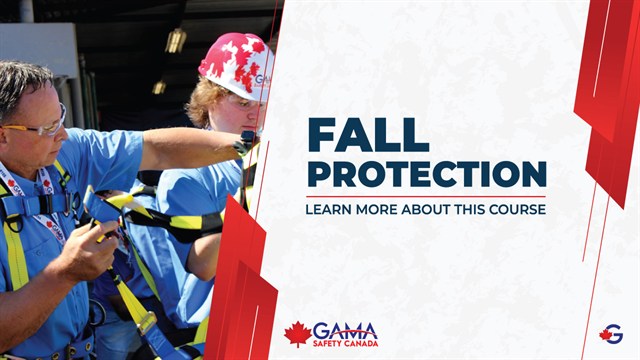
Want the hands-on fall protection class?
In-person class with an instructor at our Burnaby centre, from CA$224.95 + GST. Certificate and wallet card when you pass. Next class: Mon, Nov 9.
The rule: Part 11 of the OHS Regulation
Fall protection in BC is covered by Part 11 of WorkSafeBC's Occupational Health and Safety Regulation. Section 11.2 says the employer must ensure a fall protection system is used when work is being done at a place:
- (a) from which a fall of 3 m (10 ft) or more may occur, or
- (b) where a fall from less than 3 m involves a risk of injury greater than the risk from impact on a flat surface.
The second part matters. Working just 1.5 m above an open tank, moving conveyor, stack of exposed rebar or deep water can require fall protection even though it's well under 3 m.
The order of controls (what to use first)
BC doesn't let you jump straight to a harness. Section 11.2 sets a clear order. Use the first option that is practicable:
- Guardrails, or similar fall restraint, that meet Part 4 of the Regulation.
- Another fall restraint system, such as a harness and lanyard set so you can't reach the edge.
- A fall arrest system (which stops you after you fall), or a rope access system that meets Part 34.
- Work procedures acceptable to WorkSafeBC that minimize the risk, only when the options above aren't practicable or would create a greater hazard.
Fall restraint keeps you from falling. Fall arrest stops you once you've fallen. Restraint is preferred because nobody gets hurt by the fall itself or by hanging in a harness.
When you need a written fall protection plan
Under section 11.3, the employer must have a written fall protection plan when:
- work is done where workers are not protected by permanent guardrails and a fall of 7.5 m (25 ft) or more could occur, or
- the employer is relying on work procedures (step 4 above) instead of equipment.
The plan must be available at the workplace before work with a risk of falling begins. WorkSafeBC's guidance says it should include procedures to rescue a worker who has fallen and is hanging in a harness or safety net and can't rescue themselves.
Get your Fall Protection certificate today
100% online · unlimited free retakes · instant certificate + free wallet card
Training and inspection
Two more rules apply on every job with a fall risk:
- Instruction first. Before a worker is allowed into an area where there's a risk of falling, the employer must make sure the worker is instructed in the fall protection system for that area and the procedures to follow (s. 11.2(6)).
- Inspect the gear. Equipment used in a fall protection system must be inspected by a qualified person before use on each workshift, kept free from anything that could damage it, and maintained in good working order (s. 11.9).
In practice, most employers and general contractors want to see a fall protection training certificate before you go up.
Common situations in BC
- Roofing and framing on houses and low-rise buildings often passes 3 m quickly.
- Boom lifts: operators and occupants typically wear a harness and lanyard attached to the platform's anchor point. Follow the manufacturer's instructions and your site's rules.
- Scissor lifts usually rely on the platform guardrails, but site rules and manufacturer instructions may add more. See our scissor lift certification guide.
- Loading docks, mezzanines and pits can need fall protection below 3 m if there's something dangerous below.
How to get certified with Gama Safety
- Online Fall Protection — $52.95. Our online course takes about 3 hours, in English or French. Pass the final exam (80% or better) to get your digital certificate right away, plus a physical wallet card mailed free.
- Hands-on Fall Protection — $224.95. Our 8-hour on-campus course at 122-2544 Douglas Road, Burnaby adds practical work with harnesses, lanyards and anchors under an instructor. Classes run on many dates each month; see the course page for the next ones.
More about our BC classes: Fall protection course in BC. Questions? Call +1 (866) 661-9803 or email info@gamasafety.ca.
Frequently asked questions
At what height is fall protection required in BC?
At 3 m (10 ft) or more. Below 3 m, it's still required if a fall could cause a worse injury than landing on a flat surface.
Is fall protection required at 6 feet in BC?
Not automatically. The BC trigger is 3 m (10 ft). But if there's a hazard below, like machinery or an open tank, fall protection is required at a lower height. Some employers and sites set stricter rules.
When is a fall protection plan required in BC?
When workers aren't protected by permanent guardrails and could fall 7.5 m (25 ft) or more, or when the employer uses work procedures instead of fall protection equipment.
Do I need fall protection training to use a harness?
Yes. Your employer must instruct you in the fall protection system and procedures before you work in an area with a fall risk.
Who inspects fall protection equipment?
A qualified person must inspect it before use on each workshift.
Related