
WHMIS, the Workplace Hazardous Materials Information System, is Canada’s national system for communicating chemical hazards at work. It uses three tools, labels, Safety Data Sheets (SDSs) and worker training, so everyone who works with or near hazardous products knows the dangers and how to stay safe. This guide explains how WHMIS works, what every pictogram means, who needs training, and how to get your WHMIS certificate online.
What is WHMIS?
WHMIS is Canada’s hazard communication standard for workplace chemicals. Suppliers must classify their hazardous products and provide labels and Safety Data Sheets. Employers must make sure products are labelled, SDSs are available, and workers are trained.
The current version is usually called WHMIS 2015, because it was updated that year to align with the Globally Harmonized System of Classification and Labelling of Chemicals (GHS), used around the world. The move from the old WHMIS 1988 system ended for most workplaces on December 1, 2018, so any training today should be WHMIS 2015 / GHS.
WHMIS is set out federally in the Hazardous Products Act and Hazardous Products Regulations (for suppliers), and in each province’s and territory’s occupational health and safety laws (for employers and workers).
The 3 parts of WHMIS
1. Labels
Supplier labels and workplace labels show the product name, hazards, pictograms and precautions.
2. Safety Data Sheets
A 16-section document with full details: hazards, first aid, firefighting, spills, handling, storage and PPE.
3. Worker training
General WHMIS education plus training on the specific products at your workplace.
Supplier labels come on products from the manufacturer or importer. Workplace labels are used when a product is moved into another container or made on site. Labels use a signal word: “Danger” for more severe hazards and “Warning” for less severe ones.
WHMIS pictograms and what they mean
Pictograms are the symbols inside a red diamond on a label. Each one tells you the type of hazard at a glance. Learn these and you can read any WHMIS label quickly.
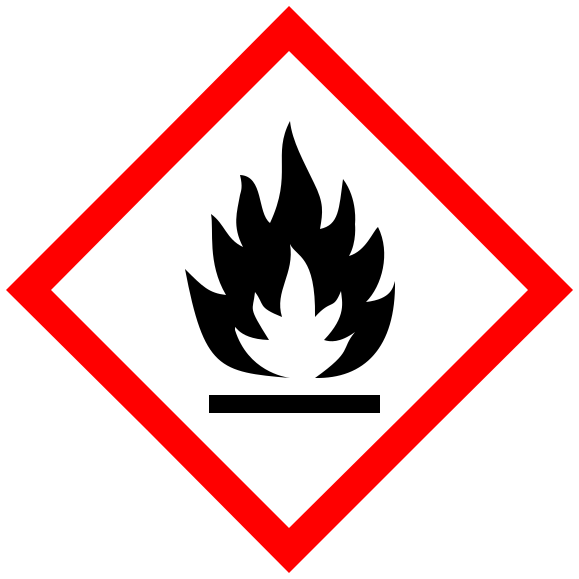
Flame
Flammable products: they can catch fire easily, or give off flammable gas.
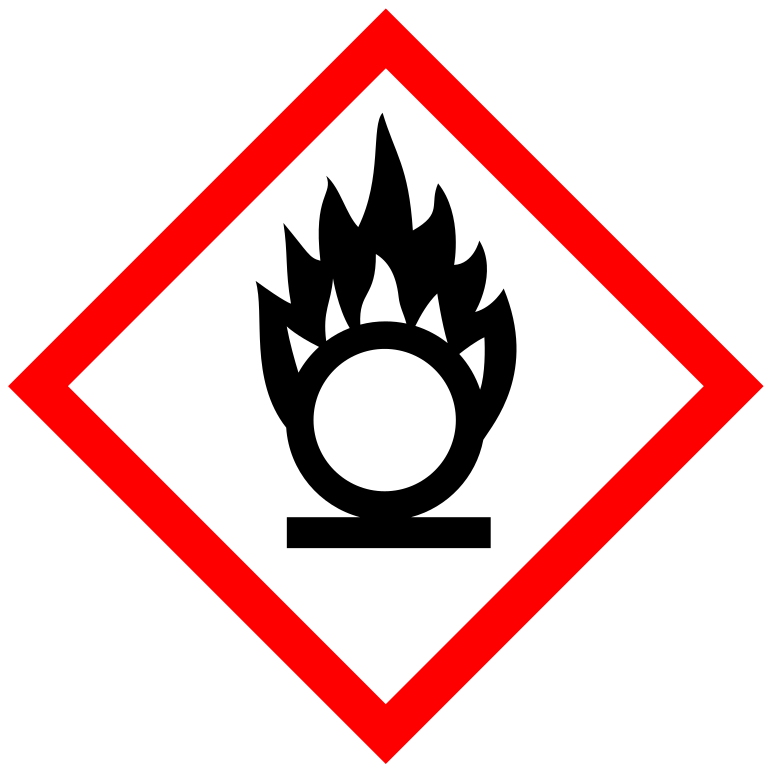
Flame over circle
Oxidizers: they can cause or worsen a fire.
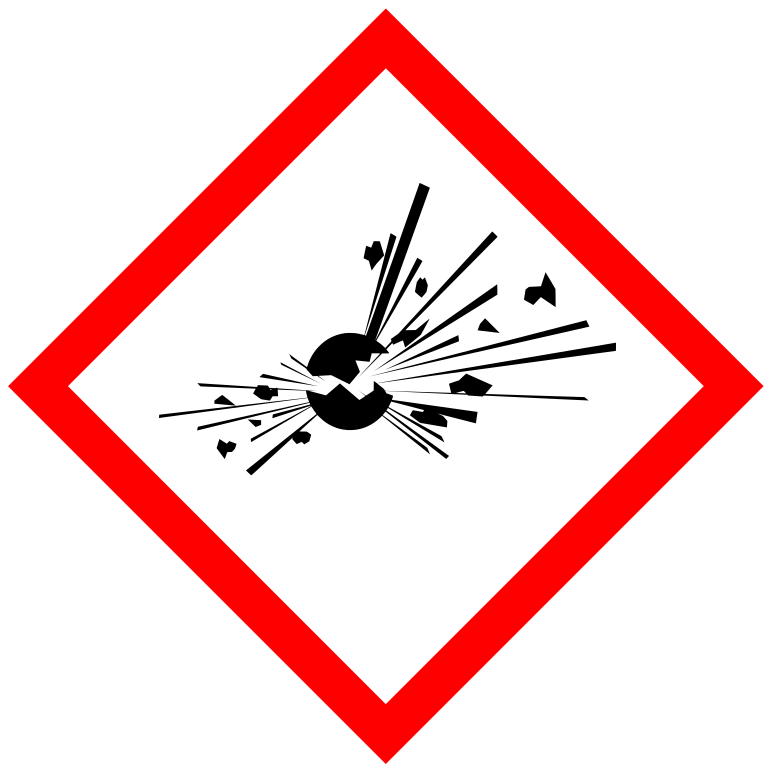
Exploding bomb
Explosives and some self-reactive products and organic peroxides.
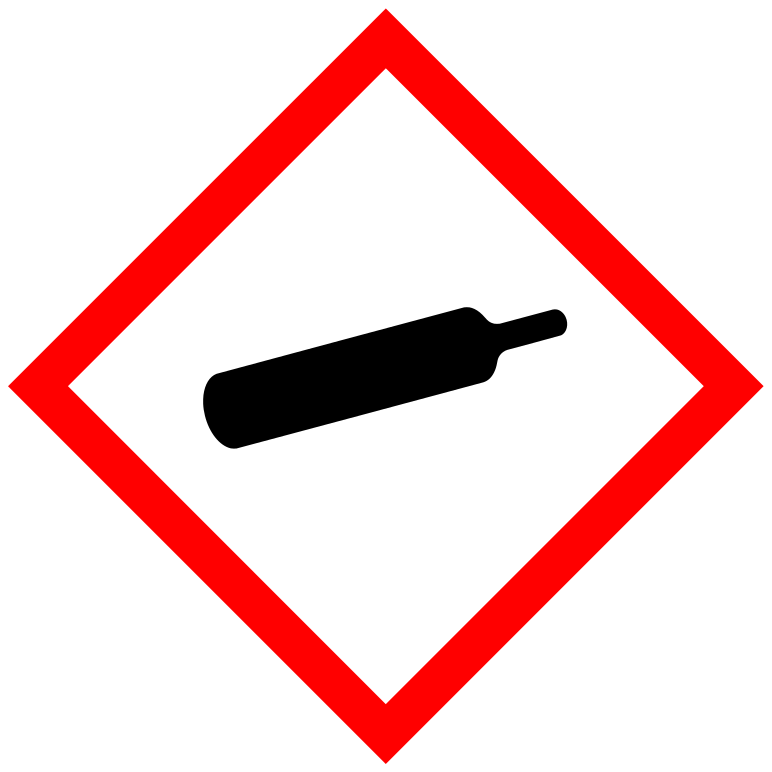
Gas cylinder
Gases under pressure: the container may explode if heated.
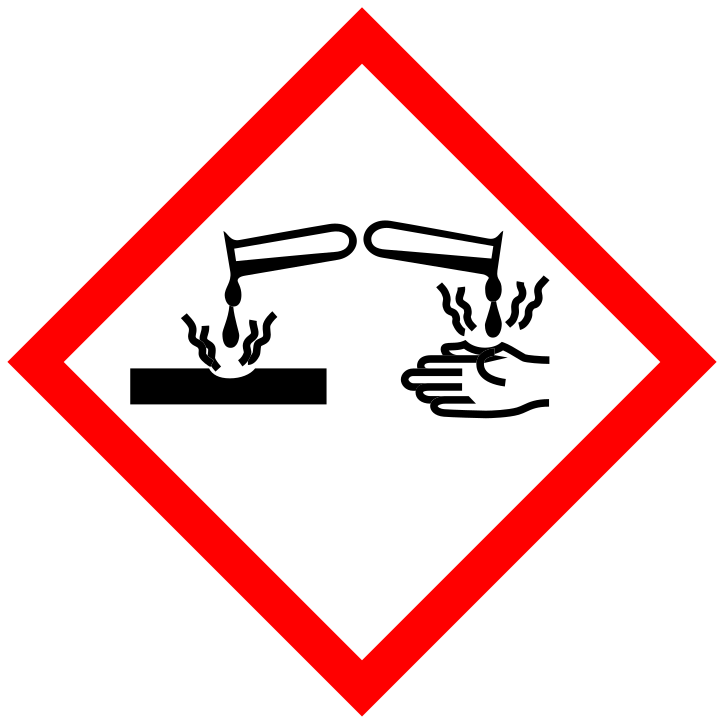
Corrosion
Corrodes metal, or causes severe skin burns and eye damage.
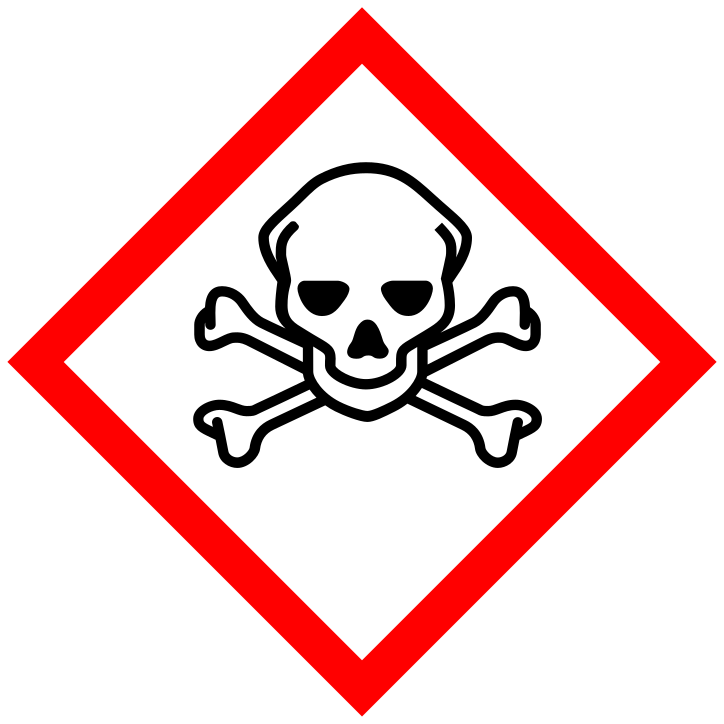
Skull and crossbones
Acute toxicity: can be fatal or toxic even in small amounts.
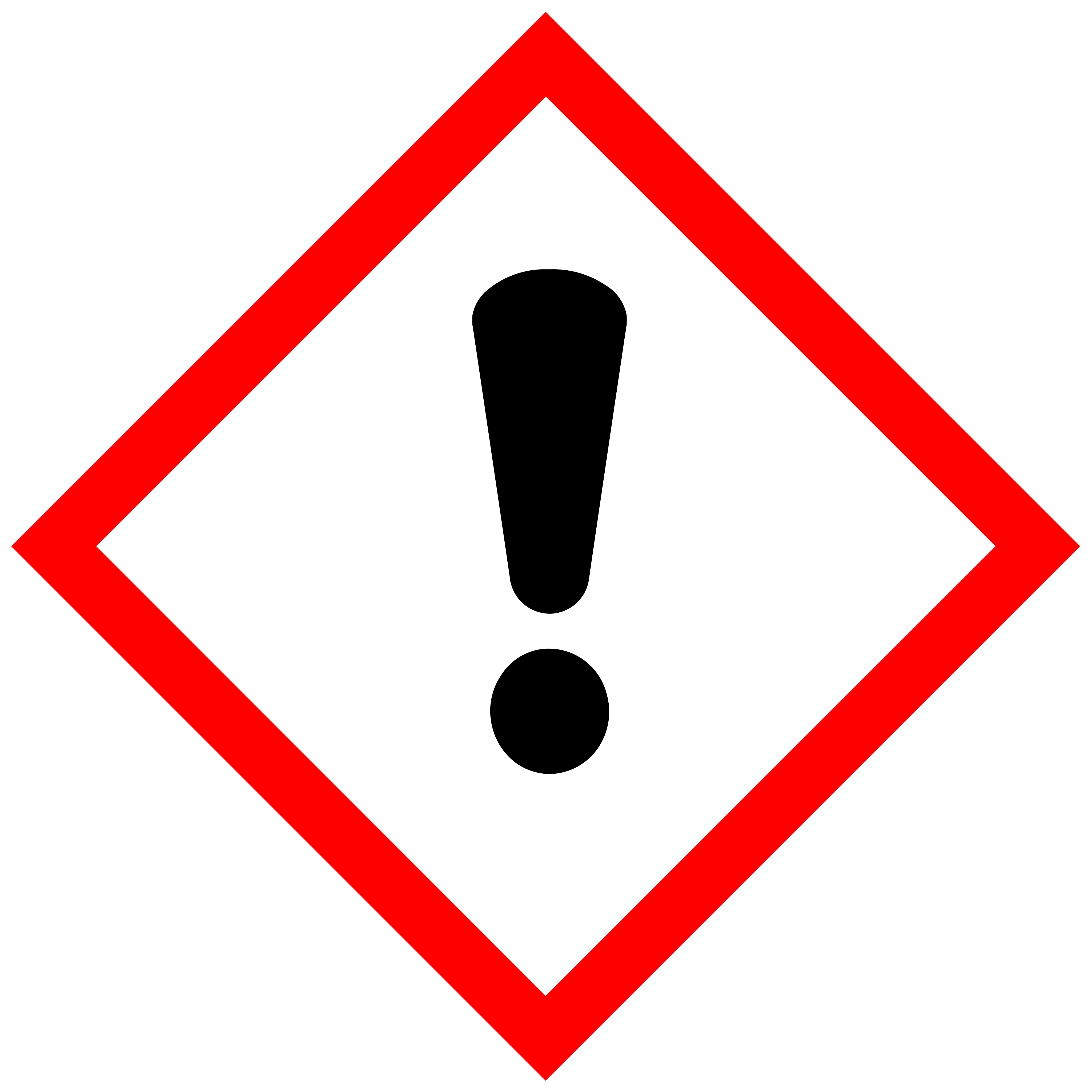
Exclamation mark
Less severe health effects: irritation, allergic skin reaction, dizziness.
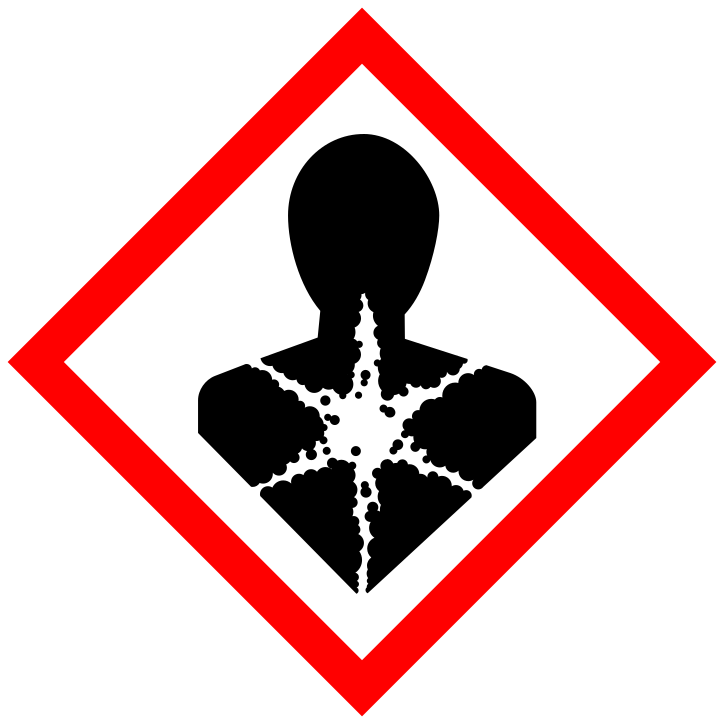
Health hazard
Serious long-term effects: cancer, organ damage, breathing sensitization.
WHMIS also has a ninth pictogram for biohazardous infectious materials (a biohazard symbol inside a black circle), used for organisms and toxins that can cause disease.
Get your WHMIS certificate today
100% online · unlimited free retakes · instant certificate + free wallet card
Physical and health hazards
WHMIS sorts hazards into two main groups, each with several classes and categories. Category 1 is always the most severe.
- Physical hazards: flammable gases, liquids and solids, oxidizers, gases under pressure, explosives and self-reactive substances, substances that are corrosive to metals, and combustible dusts.
- Health hazards: acute toxicity, skin corrosion or irritation, serious eye damage, respiratory or skin sensitization, cancer-causing chemicals (carcinogens), reproductive toxicity, organ toxicity and aspiration hazards, plus biohazardous infectious materials.
Who needs WHMIS training?
Anyone who works with, or may be exposed to, hazardous products at work. That includes many jobs in:
New workers, students and newcomers to Canada are often asked for a WHMIS certificate before their first shift, and many staffing agencies ask for it too.
There are two layers, and you need both. General WHMIS education (what a WHMIS certificate covers) teaches the system and goes with you from job to job. Workplace-specific training must come from your employer and covers the actual products at your site, where the SDSs are kept, and your site’s procedures for handling, storage, spills and emergencies.
Does a WHMIS certificate expire?
There is no single national expiry date. Employers must review WHMIS training regularly (at least once a year in BC and Ontario) and retrain workers when products, hazards or procedures change. Many employers set their own refresher cycle, often every 1 to 3 years.
When you hand your certificate to a new employer, they usually check that it says WHMIS 2015 / GHS, that it is recent, that your name is correct, and who the training provider was.
How to get your WHMIS certificate online
- Enrol in the online WHMIS 2015 (GHS) course and start right away on your phone, tablet or computer.
- Learn at your own pace. Most people finish in about 90 minutes, and your progress saves automatically.
- Pass the final exam with 80% or better. Retakes are unlimited and free.
- Download your certificate right away. A physical wallet card is mailed to you free.
The course is available in English, French, Spanish, Punjabi, Hindi, Mandarin and more. Training a team? Volume pricing starts at 2 seats, with a dashboard to track who is certified.
Frequently asked questions
What does WHMIS stand for?
WHMIS stands for Workplace Hazardous Materials Information System. It is Canada’s national system for communicating the hazards of chemicals and other hazardous products at work.
Is an online WHMIS certificate valid?
Online WHMIS training is widely accepted when it covers WHMIS 2015 / GHS. Your employer decides what they accept, and they must still give you training on the products at your own workplace.
How long does it take to get WHMIS online?
About 90 minutes for most people. You can stop and continue anytime, and you can download your certificate as soon as you pass.
How many WHMIS pictograms are there?
There are 10 WHMIS pictograms: 9 GHS hazard symbols (8 of which are mandatory in WHMIS; the environmental one is optional) plus the WHMIS biohazardous infectious materials symbol.
What is the difference between WHMIS 1988 and WHMIS 2015?
WHMIS 2015 replaced WHMIS 1988 to align Canada with the international GHS system. It brought new pictograms in red diamonds, new label rules, signal words and a standard 16-section Safety Data Sheet. Training today should cover WHMIS 2015.
What if I fail the WHMIS exam?
With Gama Safety you can retake the exam as many times as you need, at no extra cost.
Related